
I’m serving on the next NYC Comptroller’s Transition Committee
Plus my breakdown of what the NYC Comptroller really controls (and what they don’t)

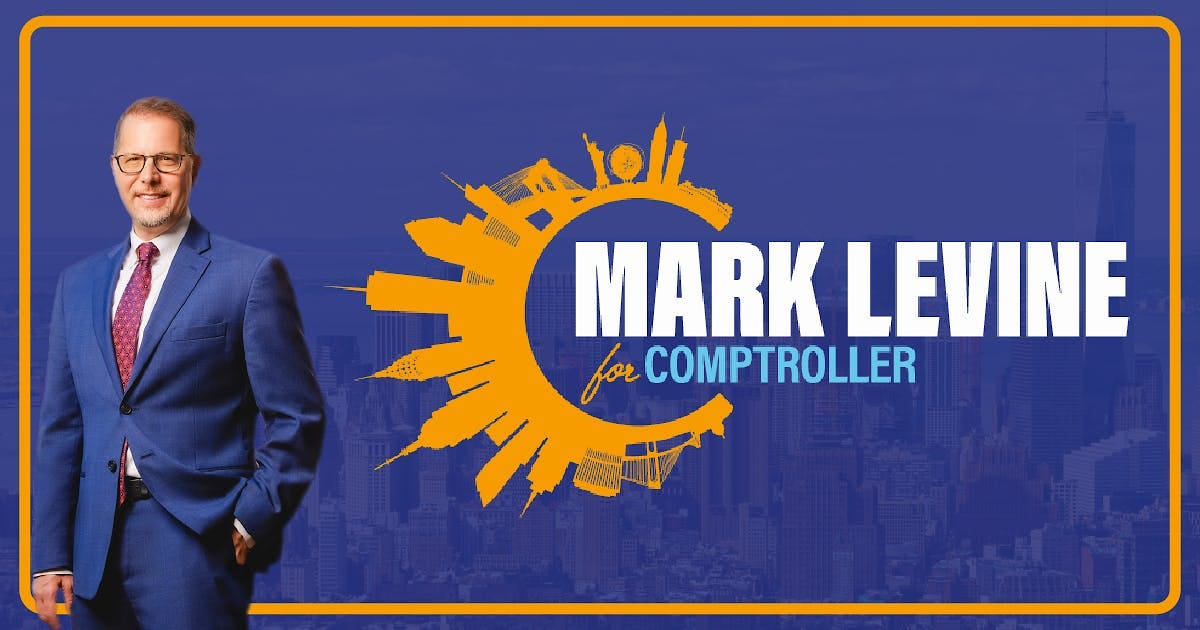
I’m honored to serve on Mark Levine’s transition committee as he prepares to begin his new role of New York City Comptroller.
So:
What does NYC’s Comptroller do again?
Who is the new Comptroller?
What is a transition committee?
What can you do?
What does NYC’s Comptroller do again?
The NYC Comptroller is the city’s chief financial officer (CFO) and independent watchdog over how the city spends its money. The Comptroller is elected citywide and operates independently from the Mayor and City Council.
Like all elected roles, the Comptroller has direct control over some things, and indirect influence over others. Before writing this, I had a good idea of what the Comptroller’s role is, but not where the office has actual authority vs. just influence. Direct authority, meaning power to sign or approve decisions or manage processes. Even though some Comptroller roles don’t have direct authority, they’re powerful by way of influence. New York City’s system has a ton of checks and balances, so the only way anything gets done is by influencing multiple players, whether that’s other city elected officials, state electeds, or community members.
Here’s my breakdown of which Comptroller powers are more “direct authority” vs. more “influence”.
NYC Comptroller Roles with Direct Authority
Auditing City Agencies
The Comptroller is required to audit every City agency at least once every four years to ensure funds are used efficiently, legally, and effectively. Each audit report typically includes recommendations for improvement, and agencies must report on their progress in implementing recommendations. The Comptroller’s office tracks and publicly reports on the status of these implementations.
Note: Agencies can reject the Comptroller’s recommendations, but they have to give reasons for doing so. The Comptroller’s public accountability is strong for agencies to comply, since the Comptroller’s report provides ammo for media and advocacy groups to cause a stink if they don’t.
Pension Fund Management
The Comptroller is the investment advisor to the City’s five public pension funds, totaling ~$302 billion in assets. Each of the five pension funds has its own Board of Trustees, comprised of elected and appointed officials and union representatives, who ultimately make decisions on the funds’ asset allocations. The Comptroller is also a trustee to each of the pension funds.
With the pension funds, the Comptroller holds significantly more authority than the Mayor– as illustrated by Mayor Adams’s inability to force reinvestment after Comptroller Lander opted not to invest pension funds in Israeli bonds.
Managing Claims Against the City
The Comptroller manages and settles claims filed against NYC. Once the Comptroller either denies the claim or can’t reach a settlement with the person who filed it, only then can that person move forward with a lawsuit.
You might think this would make more sense for the law department to own, but as the city’s fiscal watchdog, the Comptroller’s office uses claims data to spot recurring problems and recommend policy and practice reforms that reduce liability. The liability is significant: NYC paid out ~$2B in settled claims in FY2025. According to the Comptroller’s nifty dashboard, in FY2025, the Department of Education saw the most claims filed against their agency, with NYPD in second place.
NYC Comptroller Roles with Influence
Budget Oversight
The Comptroller reviews the mayor’s proposed budget, issues independent fiscal analyses, and can warn of risks (e.g. unrealistic revenue projections, underfunded programs).
While the Comptroller cannot veto the budget, his reports influence City Council negotiations and media coverage.
Contract Approval
The Comptroller reviews all City contracts. But while the Comptroller can reject contracts, the Mayor has the authority to override that decision. For instance, when Comptroller Lander rejected a major contract with DocGo– citing several investigations and concerns about the company– the Adams administration still advanced the contract.
Investigations, Publications, and Reports
Part of the Comptroller’s job is to point out where city agencies are doing well and where they’re falling short. Naturally, that can lead to clashes with the Mayor, since the Mayor oversees those agencies. For example, Comptroller Lander investigated the Adams administration’s approval process for the Turkish Consulate building. Comptroller Lander also investigated the Adams administration’s implementation of its 60-day shelter limit for asylum-seeking families, finding “haphazard, ineffective” implementation. These investigations don’t have teeth, rather they serve as public accountability to influence lawmakers, media, advocates, and voters.
Who is the new Comptroller?
Mark Levine was elected NYC Comptroller this November. Mark currently serves as Manhattan Borough President.
I’ve been a huge fan of Mark Levine for a while. It takes real bravery for elected officials in NYC to stand up for housing over parking. To stand up for train commuting over car commuting. Mark Levine has been taking brave stances from the beginning and will continue to champion sound policy as NYC Comptroller.
What is a transition committee?
The stretch of time between Election Day and Inauguration Day is “the transition”. This is when electeds translate broad policy ideas into concrete proposals. During this period, newly elected leaders appoint a “transition committee” to support developing policy recommendations for the incoming administration.
Given my role as a board member with Open New York, I’ll be approaching the transition committee meetings with particular attention to housing issues🏠. NYC hasn’t been building enough housing, and the Comptroller has its own levers to ease our housing crisis.
And if you’ve read my series on public toilets🚽, you also know I care about procurement– the City’s contracting processes can add time and expense to critical public infrastructure.
What can you do?
Submit your resume to work for the Comptroller’s office:
To apply for a job on Mark’s team, email your cover letter and resume to resume@levinetransition2025.com
Submit your ideas directly to Mark’s team:
What are your takes on how the Comptroller can make our city a better place? Submit here!
Suggest an audit or investigation:
Do you have a sneaking suspicion (or actual evidence) that a city agency isn’t doing a great job? Since agencies are stewards of public funds, they’re supposed to operate effectively, efficiently, economically, ethically, and equitably. Submit this form to suggest an audit or investigation.
SO MANY CONGRATS!!! NYC IS SAVED 👐👐!! HUGE INSPIRATION FOR ALL OF US
This is major! Congrats Sachi!!!